
Prince Edward Island’s (PEI) energy future is at an inflection point. While the province has made strides in efficiency and clean energy, questions about reliability, affordability and how to reach net-zero remain top of mind for many Islanders. Central to the province’s energy future is the PEI Energy Strategy, which was released in October, 2025.
To better understand how PEI plans to balance energy priorities and prepare for an evolving landscape, the Atlantica Centre for Energy sat down with Kathleen Brennan, Acting Director of Policy and Planning with the PEI Department of Environment, Energy and Climate Action and representative of the PEI Energy Corporation. What follows is a condensed Q&A based on that conversation.
The PEI Energy Strategy emphasizes climate action, affordability, and energy system reliability. How does it balance these priorities?
Reliable energy is essential for residents and businesses, and businesses need confidence in the system to invest in PEI. Affordability is also a major concern, and targeted policies and programs can help reduce the burden on the most vulnerable.
PEI is a national leader in efforts to make energy more affordable through income-qualifying efficiency programs. These programs are designed to support households that feel energy costs the most. The Province also places a strong focus on efficiency and conservation, recognizing that the cheapest kilowatt-hour is the one that is never used.
At the same time, PEI has strong sustainability advantages. The province has world-class wind resources, a low-emitting electricity grid, and clear climate ambitions supported by clean technology development and legislated net-zero targets. The Strategy identifies actions across all of these areas. As implementation moves forward, the Province expects to continue balancing climate action, affordability, and reliability by taking a holistic approach across all energy sources and uses.

Kathleen Brennan
Acting Director of Policy & Planning, PEI Department of Environment
Atlantica was pleased to see the Strategy focus on all types of energy, including conventional transportation and heating fuels. Why was looking beyond just the electrical grid essential to creating a credible path to net-zero emissions?
The Government of Prince Edward Island is taking a holistic approach by accounting for all energy sources in the Strategy. Electricity represents a relatively small share of the province’s total greenhouse gas emissions, while most emissions come from transportation, especially passenger vehicles.
Any credible path to net-zero will require reducing emissions from transportation and other liquid fuels. The Province has already made notable progress in reducing emissions from buildings through intentional investments in residential energy efficiency programmes, which have had a measurable impact.
PEI has also managed to decouple emissions from population growth. While the population has grown by nearly 17 per cent since 2021, overall emissions have declined. Emission reductions have also been seen in agriculture, driven by consistent policies and incentive programs focused on best management practices. These outcomes show that achieving net-zero requires a comprehensive energy perspective that goes beyond electricity alone.
The Strategy highlights the risk of future electricity shortages during demand peaks. What actions are proposed to address this?
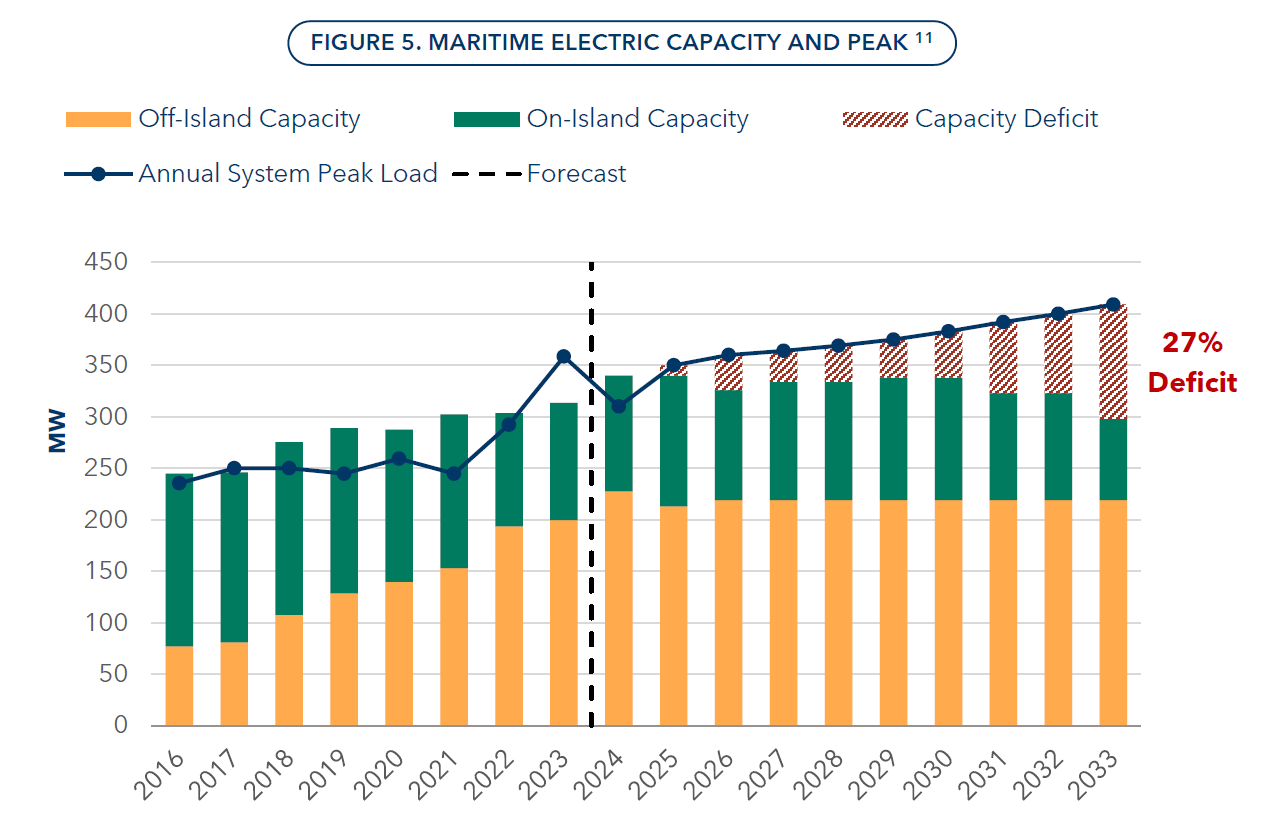
The Strategy is a long-term provincial plan developed with an understanding of current conditions and the potential for electricity shortages, particularly during periods of peak demand.
One action woven throughout the Strategy is collaboration. Strong coordination with regional and federal partners is seen as critical to addressing capacity challenges. The province is actively working to secure funding for new subsea cables and is working with regional partners to improve transmission constraints.
Improving energy literacy is another priority. Providing Islanders with the information they need allows them to be part of the solution during extreme weather events. Utilities are also managing demand on the grid to keep the broader network functioning when it is under pressure.
Demand-side management remains a key focus. PEI offers a wide range of programs that support home energy efficiency, and the Province plans to continue working with stakeholders to maintain a reliable, affordable, and sustainable energy system now and into the future.
How does the Strategy prepare the grid for increased electrification, like EVs and heat pumps, and more variable renewable energy generation, like wind?
The goal is not just to fuel-switch or increase electrification, but to pursue high-impact beneficial electrification opportunities that are well-timed and aligned with the renewable generation available on PEI, while enhancing grid capacity.
This includes infrastructure planning, targeted deployment of solutions, and the design of incentive programmes, while accounting for the intermittent nature of renewable energy resources like wind and solar.
Actions identified in the strategy include increasing the intertie with New Brunswick, pursuing on-Island dispatchable generation, exploring energy storage to balance wind and solar, and modernizing regulatory processes so they can respond to an evolving energy system.
As you worked on the Energy Strategy, what insights about PEI’s energy system surprised you – and might surprise other Islanders?
One notable takeaway is that about 75 per cent of PEI’s energy supply still comes from refined petroleum products. While electricity often dominates public discussion, it represents a small share of the overall energy picture.
Another key insight is how much progress has already been made through fuel switching and energy efficiency. PEI tied for second place with Quebec in the 2025 Efficiency Canada national report card, which is significant given the province’s size.
I think that PEI punches above its weight in a lot of these areas, so I hope the Strategy is accessible, easy to understand, and helps Islanders see both the progress already made and the role they can play in the work still ahead.
For sectors that are hard to electrify directly, what role do you see for clean fuels?
PEI already has experience using biomass. More than 40 provincial government facilities use wood chips for heating. The energy-from-waste facility in the Charlottetown area provides heat to 145 buildings, including the hospital and several schools, and is expanding to increase capacity.
There is also growing innovation led by harder-to-electrify sectors. Through partnerships between the Department of Agriculture and Efficiency P.E.I., the Agriculture Energy Systems Program supports on-farm projects that improve energy efficiency, generate renewable energy, reduce emissions, and increase resilience to energy costs.
The Province continues to monitor emerging technologies such as renewable natural gas and hydrogen, so it is prepared to use them when they are available and cost-effective.
As a small province, does this Strategy call for deeper collaboration with neighbouring provinces when it comes to energy?
Absolutely.
We know that regional collaboration supports better planning for our interconnected grids. The strategy includes actions to enhance cooperation among Atlantic provinces by aligning regulations, policy development, and planning.
PEI relies on our long-standing partnership with New Brunswick for electricity supply, so working together on actions such as upgrading our interprovincial transmission infrastructure would strengthen energy security while supporting economic growth.
The Province is also closely watching developments in neighbouring provinces, including Nova Scotia’s work on an Independent Energy System Operator, and sees opportunities to share learnings and develop new approaches together.
Atlantica’s research shows public understanding is critical for a successful energy transition. What is your core message to Islanders about why energy literacy matters?
Energy literacy is essential to implementing the Strategy and helping people make informed decisions. PEI already has high participation in energy efficiency programs, showing strong public interest.
At the same time, periods of change can create uncertainty and allow misinformation to spread. Clear, accurate, and accessible information helps build understanding, trust, and meaningful public participation. Energy literacy supports better decision-making by households and businesses and helps align expectations across the system.
The core message is that energy is foundational to everything we do. Understanding energy helps all Islanders, from ratepayers to regulators, make informed choices for their homes and businesses and participate in the transition.
The Strategy includes several initiatives to support energy literacy. These include public education campaigns on key topics such as electrification, clean technologies, rate structures, energy efficiency, climate goals, and how these pieces connect. It also includes building energy performance labelling and disclosure to support informed decisions by homeowners, tenants, and investors.
The Strategy also emphasizes clear communication during emergencies, such as extreme weather events, to improve public awareness and safety. In addition, it supports expanded training and certification programs for in-demand roles like linemen, building contractors, and EV charging technicians, as well as reskilling and upskilling initiatives to help workers in related sectors transition into clean energy careers.
How will the provincial government engage communities, Indigenous partners, and industries?
There is no one-size-fits-all approach to engagement. The provincial government recognizes the importance of building ongoing dialogue and strong relationships to understand the unique challenges different communities and industries face, as well as the strengths they bring to the table.
The approach focuses on working closely with community- and industry-level energy partners by reviewing their strategies, risk assessments, and adaptation plans. These inputs can then be explored collaboratively and integrated into tailored solutions for implementing specific actions within the Energy Strategy.
The Province also recognizes that First Nation communities on the Island have been leaders in energy innovation. The Strategy emphasizes continued collaboration with Indigenous partners and learning from their leadership as the Strategy is implemented.
What are the key priorities the province hopes to achieve in the first 24 months of the Strategy?
The Province’s top three priorities are reliability, regional collaboration, and consumer protection. The key milestones we are hoping to achieve in the first two years include developing a strong implementation plan aligned with the forthcoming Net-Zero Action Plan, establishing the Office of the Consumer Advocate, and securing necessary partnerships to upgrade our current infrastructure to ensure that we have more capacity, including increasing connections with our neighbouring provinces.