
The Atlantica Centre for Energy interviewed Brad Coady, Chief Commercial Officer, NB Power, on August 14, 2026, to discuss the proposed changes to NB Power’s rate design structure.
Can you tell us a little bit about yourself, NB Power and your role within the company?
As well as we have a strong export business where we serve loads in Northern Maine, PEI, and then by need with the Independent System Operator of New England, and Nova Scotia. So, a lot going on at the utility. We serve about 4,000 megawatts of generation, operate about 7,000 kilometers of transmission lines and more than 22,000 kilometers of distribution lines.
We have a very diverse fleet of generators, everything from nuclear to hydro to wind, solar, thermal based generation as well: heavy fuel, coal and natural gas-fired generation.
Not all of this generation is owned by NB Power, some is contracted.
We know how important energy availability, reliability and cost are to residents as well as the province’s economic development. We take this responsibility very, very seriously to provide our services at the least cost possible, at the highest reliability possible, and to try to help with affordability in all the ways that we can as a provincial utility, as a cost-of-service utility, I might add. There are no dividends, no massive profits, no investors benefiting from what we do, only the people of New Brunswick benefit from what we do.
I’m the Chief Commercial Officer for NB Power. I’ve been at NB Power for 10 years now. I started my career in Newfoundland and grew up in their version of NB Power. It was called Newfoundland Hydro at the time, now Newfoundland and Labrador Hydro. And what I do for NB Power is basically all things in terms of integrated resource planning, rate design, trying to figure out how we can integrate new and exciting sectors of our economy into how we serve it with electricity. Never a dull moment, and lately for the last seven, eight months, I’ve been responsible for our new nuclear program as well to help guide what that could look like in the future.
No shortage of things to be doing but my team is working hard and I’m blessed to have such a great team around me to keep everything moving ahead for New Brunswick.
And for context as we discuss rate design, what are the Utility’s revenues?
When you're talking about $2.0 billion annually coming from these rates, the impact of changing the revenue formulas can understandably have a big impact for different ratepayers. But before we jump into any impacts, can you share some background context in: what is rate design and why are we going through this process now in New Brunswick?
Simply put, we are regulated by the New Brunswick Energy and Utilities Board (NBEUB) and the NBEUB has ordered us to go through this process and our rates haven’t been modernized in many, many years. We initiated the process back in the late 2010s. We had our first filing on the matter in 2022 which resulted in a hearing on Phase One in 2023. And we’re now in Phase Two of that in 2026, and there’s a Phase Three on the other end of this.
To answer the first part of your question now, rate design is how does the customer see the bill? What are the components that they see on the bill and what rate card do you fall on?
Very traditionally, utilities would say, if you do the following activities, you’re an industrial customer. If you do any other commercial activities, you’re a general service customer. And if you meet these following conditions, you’re a residential customer. It had no ability to say that’s just what you did for a living or what your consumption was about. “I produce widgets, therefore I’m this” and “I sell cars and therefore I’m that.” And it had nothing to do with how you use electricity or the cost to serve that typical customer. The rate modernization program and the rate design filings, what we’re on right now is to say, it shouldn’t matter what kind of business you operate or what kind of home you have. It should say, how do you use electricity? That’s really what should matter.
And so, from that, there’s going to be some changes that mean absolutely nothing to NB Power’s bottom line, just so I’m clear on that. If you use power, if you operate a business and you look and feel like a residential customer, you should be charged rates that kind of look and feel like a residential customer. If you’re a residential customer and you operate a business on that rate card because of some legacy issues, that’s causing cross-subsidies because there might be higher costs to serve that type of a customer. [Cross-subsidies happen when one group of ratepayers, like residential customers, pay too much or too little of their share of the costs, which in turn lowers or increases the rates other rate classes need to pay].
When you talk about how people or businesses use energy, I'm assuming the big factors would be how much capacity they need, how much they actually use, and what time of the day or the year they're using it. Are there other factors that really influence how much it costs the NB Power to serve its customers?
It’s the shape of how you use electricity, how much you peak, so how much demand you create in using that electricity, and what’s your overall envelope of energy consumption over the 12 months of the year. There are some businesses that may go back to residential and some residential that may become businesses at the end of the day. Again, this doesn’t change the amount of money that NB Power collects, our bottom line doesn’t change. It’s just a redistribution of how we allocate the cost to serve those customers right across the full portfolio of our business.

You mentioned that NB Power's done a lot of research and sought opinions as directed to by the EUB. Who did the majority of the research that's gone into the rate design as proposed?
Can you give us a high-level overview of what isn't changing first, and then after some of the things that are changing from?
But as part of our process and as part of the principles that the EUB has given us, we don’t want to introduce unforeseen challenges to customers that may be moving to a different rate structure. There’s going to be what we call “bill protections” to capture customers that are moving in an adverse way, if I could say it that way. If the changes are beneficial to the customer, we want to move the customer to that rate structure as fast as we can. For others, we want to slow down the rate of change that that would show up in those bills. It’s going to be a gradual change. And gradualism is one of the principles that we had to follow so not to cause people to say “it’s totally different than what I experienced before,” to help educate the customers and move them through that process.
Bill protections is going to be a cornerstone of our plan.
In terms of how some customers might be impacted then, can you walk through some of those groups?
But if you have it industrialized, if you’ve increased the way you use power, if you brought in more machinery that didn’t exist when we developed these rates decades ago, now you’re starting to look like a small and medium, or large-size business. There’s likely going to be a different cost to serve that type of business relative to where you are today as a residential customer, for example.
So, I’d say farms are one group that we’ve been working very closely with. We’ve had many, many workshops and sessions with the Agricultural Alliance of New Brunswick (AANB) to make sure that AANB and us are aware of what the changes were. We’ve communicated with their membership through their leadership groups. We’ve attended their annual general meetings, for example.
Places of worship and churches are what we talked about just a minute ago, that’s another group. If you have a very old church building, that may face an issue. And again, these are issues that also get cleared up through normal course. If you have a church and we were upgrading your electrical service, for example, then you automatically move to a general service. So, it’s not necessarily that this [rate design change] is going to be doing it.
The other place that we’re leaning in a bit is on general service customers because right now it’s a catch-all. If you don’t do industrial and if you’re not defined as a residential, general service is like the bucket where we put everybody else that’s left. But of course, there’s small businesses, there’s medium-sized businesses, and there’s large businesses. What we’re proposing is rather than have one bucket of all business, let’s just kind of say, “how do you use power?” And some customers may see those savings because of these changes because they use it like a small business. And it may be cheaper to serve that type of customer. And again, the opposite can be true as well. If you’re a large business, it may be more expensive to serve that type of customer, so you could see some billing increases.
But again, the bottom line is none of this affects the bottom line to NB Power. There’s no new revenue going to be made from this, just a reallocation of how we recover the cost to serve all customers.
The last one I’d like to kind of point out is solar. Solar, we have had some changes coming in net metering, and then that’s probably where most of the press has been centered around “how are these changes going to affect the solar industry in New Brunswick?”
How many residential or commercial customers are using net metering today?
When the program was developed, the solar industry was very new, so the equipment was expensive and there were very few incentives to encourage it. Since that time, the technological costs have improved dramatically. The cost of doing something behind the meter today is much cheaper than it was 20 years ago. When we set the rate, we were trying to be proactive to help an emerging industry get started. But now we’re into a more mature solar industry.
The cost declines may be still coming, but at a much slower rate. And the incentive programs that we offer those customers are no longer needed to induce demand. When you offer an incentive, it has to be funded from somewhere and right now that’s coming from government or from NB Power ratepayers. If governments want to reoffer incentives, we’d gladly offer them onwards to customers, but it can’t come from NB Power customers because it impacts the affordability question.
Can you break down how rates work for net metering customers today versus how they could look if the new rate design is approved in the future?
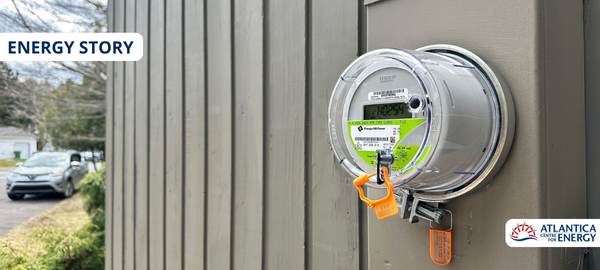
A large majority of our customers that are on the net metering program are residential customers today. They will receive a credit for every kilowatt hour they push to the grid to take one back from the grid for more or less free (subject to some Government of Canada HST rules).
Typically, solar energy produced by net metering customers is most often sent back to the grid in the middle of the day in the summer. Oddly enough, that’s when it’s cheapest for NB Power to generate electricity and serve all New Brunswickers. So it’s not necessarily helpful to get more solar in the summer.
But in the wintertime, because the days are much shorter, and our system peaks before the sun even rises on winter mornings, you get that kWh back from the grid for more or less free. So NB Power will carry the extra electricity net metering customers produce for six months or so, from the middle of summer to the middle of winter, and provide it back to them in the winter as part of the current framework.
Because of the difference in costs between serving customers from low peak (summer) to high peak (winter), we have to charge all customers more than we otherwise would need to recover the cost of activity.
We’re basically storing relatively cheap power from net metering and giving it back when it’s really, really expensive. To help correct this cross subsidization, we’re proposing a different rate [structure for net metering customers]. Experts have advised us the industry is going to a demand charge basis and an energy charge. There could be two ways we could do this: you can have a really high demand charge and a low energy charge, or no demand charge and a really high energy charge relative to our rate system today. We elected to take the middle ground. We’re not stuck in that position, but what we’re trying to say is if we move the demand charge, if we get rid of that, we need to charge more for energy. And what we’re proposing is by the introduction of demand charge is going to incent a certain amount of behavior for solar customers that are very astute and knowledgeable about energy in general. This will allow those customers then to say, okay, maybe I can shift my demand, or maybe I can build a business case now around a battery behind the meter. The other interesting thing is the demand charge would only apply Monday to Friday on non-stat holiday days between 7 A.M. and 10 P.M, when demand is highest on our system. This allows us to give net metering customers a discount on energy they use from NB Power. We’re proposing roughly a 40% discount on that energy.
The other thing I’d say is at the end of the fiscal year, if you had any surplus credits left in your program, today, we would zero those out. I believe that rule was put in place to incent customers to right-size their systems so that they’re not building big systems. On the other hand, it caused a lot of grief for customers because sometimes their systems got oversized through no fault of their own. Maybe their household size changed, and all of a sudden they were having too much energy and they didn’t plan for that when they invested in the system. And it could happen to people that buy and sell houses as well, and inherit a system from the previous owner.
So that’s the current program. Now, in the new program, we’re trying to be as proactive as possible. We’ve been hearing from customers, especially farms, that they’d like to do bigger systems. And on the current program, we had a 100-kilowatt cap, and we’re actually recommending to the EUB that we increase it to 1,000 kilowatts in cases that where system can support it. That aligns with other jurisdictions around New Brunswick. The other proposed change would allow any surplus credits that are left at the end of the fiscal year. We would monetize those and either offer the customer at their choice an on-bill credit or send them a cheque effectively, so that they can use the money for whatever they want to do. The other change we’re making based on feedback from customers, would create virtual net metering. This will allow for customers to install a solar grid on a camp or cottage if they don’t necessarily have a dwelling in an urban environment, or maybe they have tree cover or the wrong roof, maybe they’re a renter even. We’re going to allow customers to offset the production from that far away solar farm on their urban account, if the proposal works for the EUB. I believe these changes would provide different ways to encourage more solar development in the province.
What's the phase-in period for those changes?
Anybody that applies to be a part of our net metering program after November 1st this year, would be subject to the new program if it’s approved by the EUB. If you apply, we would encourage folks that want to be on the current program to get their applications in before November 1st this year, and then they need to have it installed before November 1st, 2027, and then they’ll be grandfathered into the current program.
For the large industrial customers or the smaller utilities in the province that are purchasing electricity, what changes, if any, are coming for those users under the proposed new design?
Today we have three tariffs or rate cards available to industrial customers. We have large industrial, small industrial, and general service, which means commercial. And what we’re proposing through these changes (if adopted by the NBEUB) would be to get small, medium, and large sized businesses quantified right, and then small and large industrial customers.
There may be changes to some customers around the margins, but I largely don’t anticipate many changes with customers that are on either the municipal wholesale rate or large industrial today.
If there are changes that would impact you, again, the bill protections would be proposed if those changes are seen as adverse in any way. We have a threshold there that we’re proposing as a 15% change, and then we’re going to propose to phase those rates in over five years.
The demand charge, or time-of-day usage for solar customers: are there any plans to roll that out larger scale? For context, I have a plug-in hybrid vehicle. I plug it in when I get home from picking up the kids, which is also close to supper time and our system peak.
Any sense of when Phase Three work would be presented to the EUB?
Atlantica Interview with David Brushett, Chair of Solar Nova Scotia
To better understand how the proposed rate design could affect the solar industry and customers in New Brunswick, Atlantica spoke with David Brushett, Chair of Solar Nova Scotia, on August 17. David is an engineer and consultant based in Halifax who works on distributed energy solutions supporting the region’s clean energy transition.
In 2022, Nova Scotia Power proposed a new system access charge for net-metering customers. Following significant public concern, the provincial government amended legislation to prevent charges that would discourage customers from generating their own renewable electricity.
While NB Power’s proposal is different, David is concerned that the proposed demand charge could discourage future investment in distributed solar.
More broadly, David believes enabling batteries should be a precondition to significant changes in net-metering rate design. Solar combined with batteries could help address concerns about solar’s limited contribution to winter peaks by shifting energy to periods of higher demand and potentially providing other grid services. Programs, technology and market mechanisms that enable those capabilities should be developed before fundamentally changing how distributed solar is valued.
David also believes New Brunswick should look beyond lost electricity sales from solar customers. The province has already made significant progress electrifying building heating, and transportation represents another major opportunity. Replacing gasoline and diesel use with electricity could add substantial beneficial load while reducing fossil-fuel consumption.
Nova Scotia Power’s Distributed Energy Resources Integration Roadmap provides one example of a broader approach to enabling batteries and other technologies to provide greater value to the electricity system.