

There is a lot of excitement around the potential for offshore wind energy in Nova Scotia and elsewhere across the Atlantic, and rightfully so. On February 4, 2026, Premier Tim Houston and Massachusetts Governor, Maura Healey, signed an agreement to work toward Nova Scotia supplying Massachusetts with clean energy from offshore wind.
The conversation is no longer about whether the wind resource exists off the region’s coasts. The question is how much of it can actually be developed, when, and at what cost.
New research released by Net Zero Atlantic and Stantec helps bring this conversation down to earth. The findings do not shrink the region’s opportunity to develop offshore wind but do add important context. The opportunity and interest are real, but the potential, albeit large, is not unlimited.
What the reports say:
Net Zero Atlantic’s Atlantic Canada Offshore Wind Grid Integration and Transmission Study is a three-part research series with a goal of providing a thorough understanding of the opportunities and challenges for integrating offshore wind energy into the Atlantic Canadian grid, for both domestic use and export. This research is conducted by Stantec in partnership with Energy and Environmental Economics (E3).
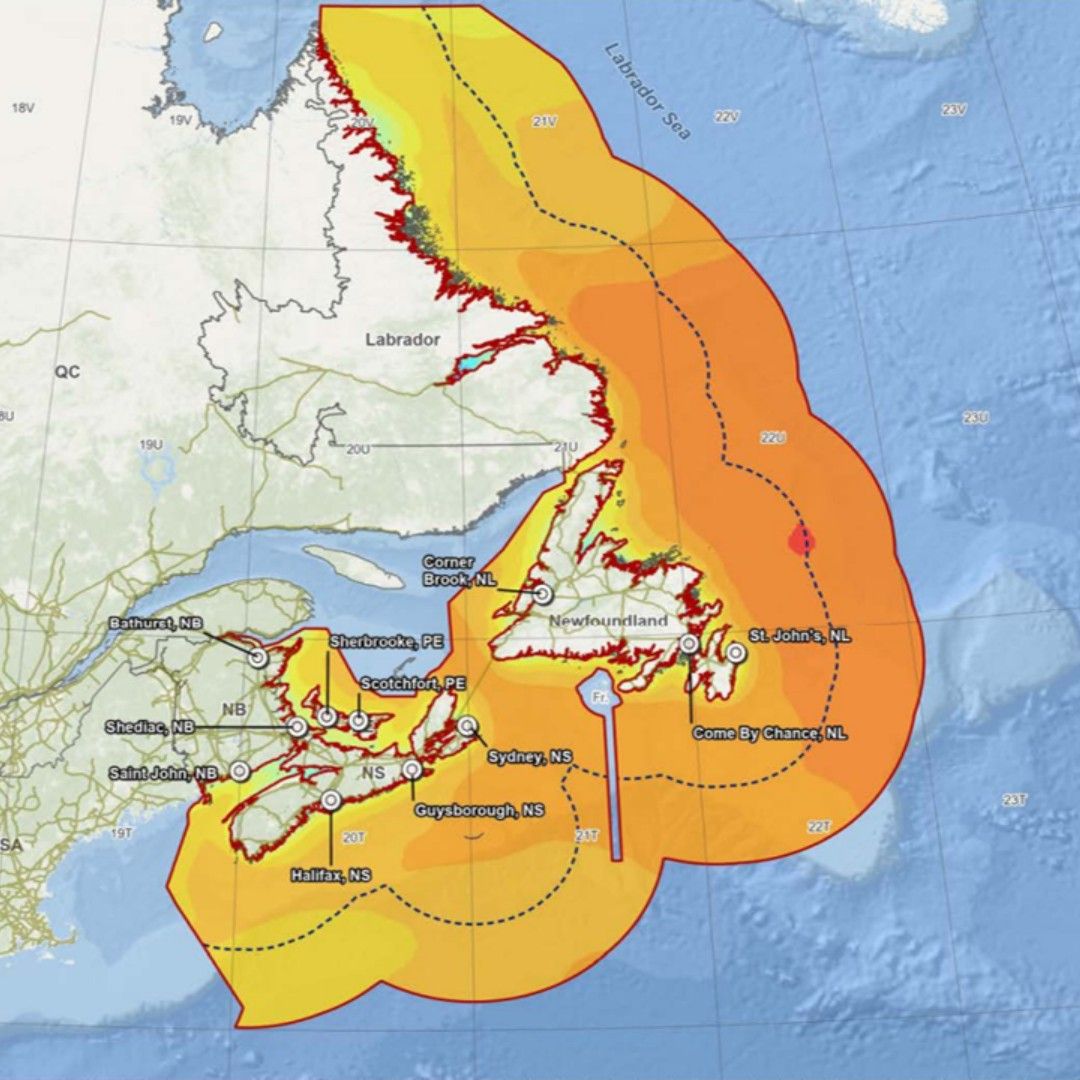
The first two phases of this research have been completed:
- Market Opportunities for Offshore Wind in Atlantic Canada (June 2025); and,
- Actual Deployment Potential of Atlantic Canada Offshore Wind (January 2026).
The first report evaluated pathways to market for offshore wind. The second report focuses on the potential of this resource. The final report in the series will develop a transmission plan based on findings form the first two documents.
The second report focused on real-world constraints such as grid capacity, transmission limits, environmental protections, competing ocean uses, port infrastructure, supply chains, and overall project economics. In other words, it examined not just how strong the wind is, but what it would actually take to turn that wind into electricity delivered to customers.
Even after accounting for constraints, the studies suggest that tens of gigawatts of offshore wind could be developed over time. That is far more electricity than Nova Scotia currently consumes.
As Ericka Wicks, regional sector lead for energy transition and renewable energy at Stantec, told CBC News, “The Stantec study focused heavily on constraints facing the sector,” which reduced the real-world potential compared to older studies and projections. “Regardless of whether it’s 16.5 or 60 (gigawatts), it’s still a massive number.”
The report also outlines that generating power is not the only challenge; moving it is just as critical. To export electricity to other provinces or to the United States, major transmission investments would be required, including potential subsea cables, grid reinforcements on land, and new interconnections. These projects are complex, capital-intensive, and take time to plan and permit. Without expanded transmission capacity, large-scale offshore wind development would be limited.
The report also underline that export markets will likely determine the ultimate scale of development. For Nova Scotia, domestic demand alone cannot support very large build outs. Long-term buyers outside the province would be needed to justify major investments. At the same time, interest must translate into commercial agreements, regulatory approvals, and infrastructure commitments before projects can move forward.
So where does this leave Atlantic Canada’s offshore wind sector?
To focus on Nova Scotia, the offshore wind sector continues to have a place of genuine opportunity for the province. This sector could anchor long-term economic growth, strengthen ports, attract supply chain investment, and grow Atlantic Canada’s position as a clean energy exporter.
The potential is not unlimited. It is not as high as some early projections suggested, but it is still significant. The conversation now needs to focus on execution, including building market access, transmission planning, regulatory certainty and strategic partnerships.
If these fundamentals are successful, offshore wind can be a cornerstone of Nova Scotia’s energy and economic future.